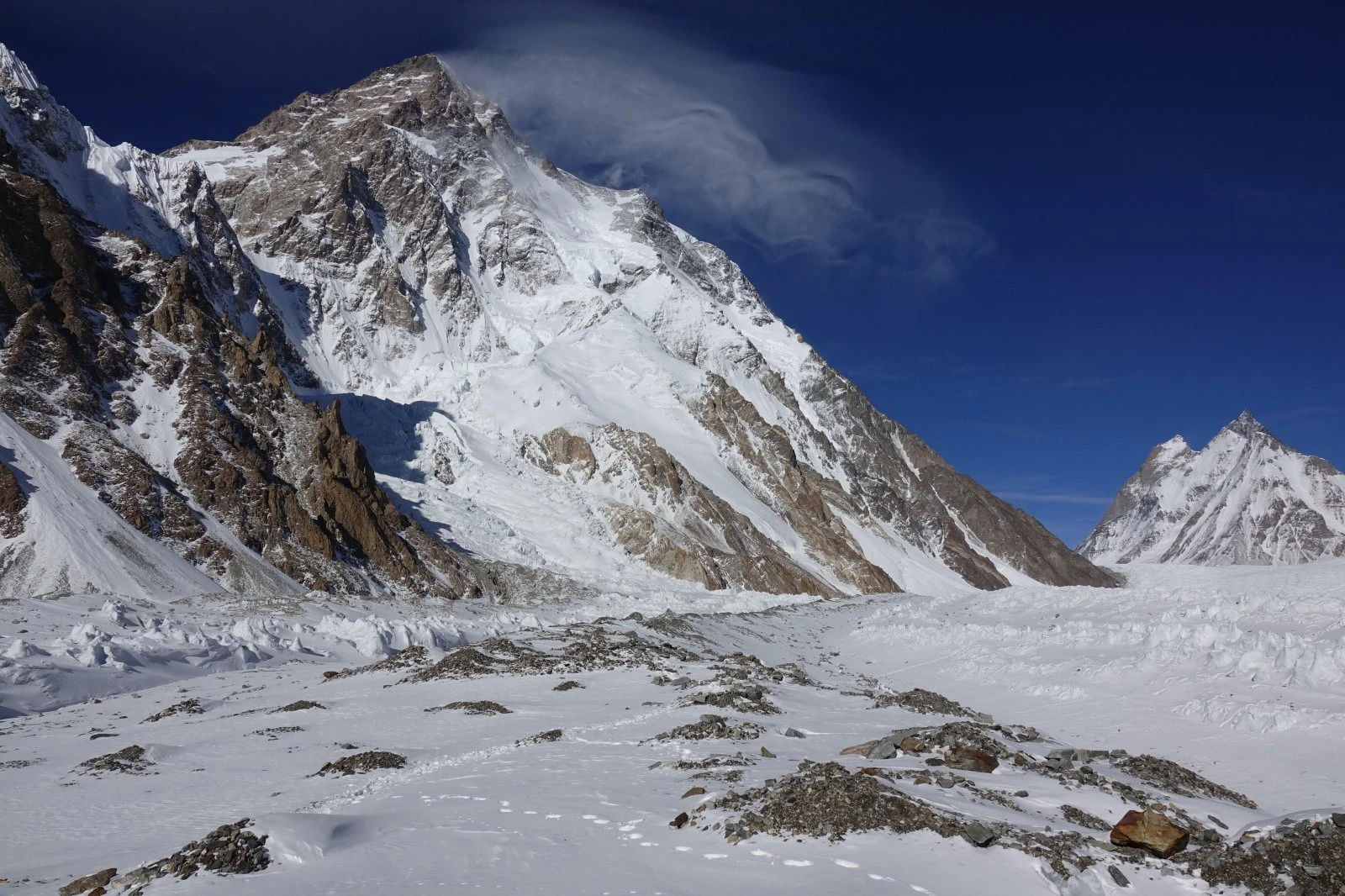
There have been many expeditions trying to conquer K2 in the winter. Mountain climbing separates the calendar winter, which lasts until March 21, and the meteorological winter, which ends in late February. The summit still remains intact during one winter or another, and is still awaiting an expedition that will be fortunate enough and courageous enough to grab one of the great mountaineering achievements of modern times.
I left home on 3.1.2020 and arrived in Islamabad the next day. The air connection to Scardu, the capital of Gilgit-Baltistan, where K2 is waiting, is poor in the winter and only occasional, so we departed by plane to Gigit, which has regular connections and from there to Scardu via the winter Karakorum Highway. The driving took 16 hours because of snow, road works, and especially because of slippery tires and car breakdowns, although we only managed a 180 km long route. In the meantime, we also replaced a car that was also without heat and half open at 20 degrees below zero. We got the replacement car only due ingenuity of our guide Serbaz , who made a deal with a local driver of 50 years old Toyota pick up.
In Scardu, we waited five days for Mingmo G the leader and mountaineer Gao Li ,to be late for a visa that was not ready at the time. Driving to Ascole was "interesting" in the winter due to the already described transport problems, and also life-threatening for the European standards. We waited too long in Ascole, the last village before Baltoro, for the, even though we were already delayed for several days.
We walked to the base camp for nine days, trailing more than a meter of snow in places and the temperatures were deep below freezing all the time and reached our destination on 22.1.2020. The base camp was set very low, six kilometres away from the foot of the mountain, which is even lower than the area where the annual base camps are set up, despite opposition from John Snorri and me, who was otherwise the initiator of the winter climb.
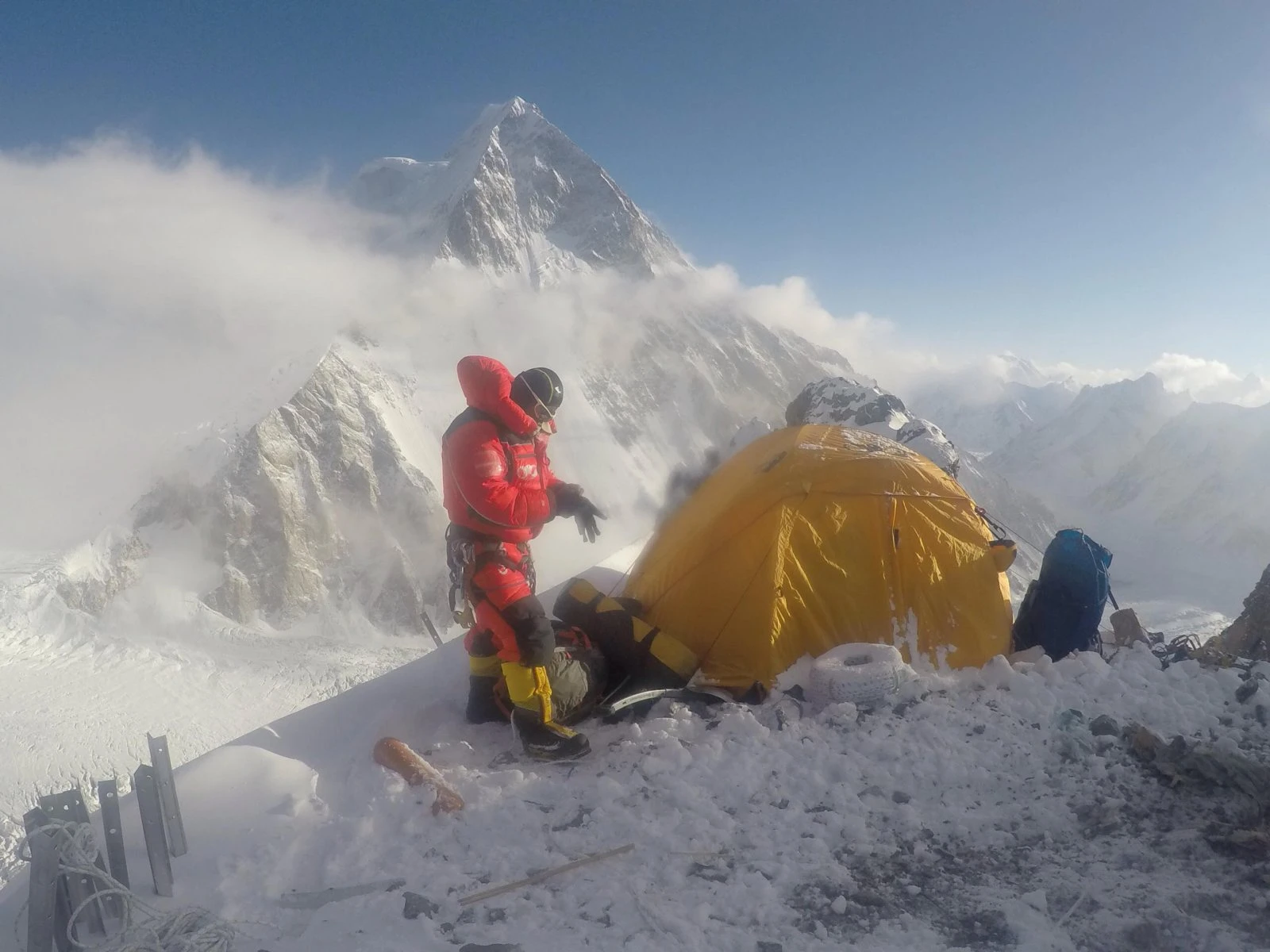
After a day of rest, we began our ascent. We finished the first rotation a bit on ABC, which lies just at the foot of Abruzzi's direction, which was also our direction. The second rotation ended at C1 (first altitude camp, 6000m), to which we also managed to set the ropes. Mingma G and Gao Li completely unannounced and without any notice to the other participants, decided to slep on C1 and returned the next day with “bad” experiences. Mingma G has announced that he is probably no longer returning to the mountain, claiming on to low temperatures and that he is also afraid for his three Sherpas, who are among the most experienced in the world. They all have “under the roof” at least some climbs on Everest, winter Lhotse, Anapurna, Kanchenjungo…
The third rotation ended a bit above C1 and after a sleepless night on C1for sherpas, also claiming on to hard conditions. Snorri and I continued our work on the mountain by ourselves, roping almost to C2, and slept on the mountain for two consecutive nights without any problems, to be larger than expected.
Two days after the third rotation, Mingma G ordered his own evacuation due to his bad health and due to Gao Li's concern over the domestic Korona virus, although it was clear that Gao would not be able to return home immediately to China due to border quarantine. He was also in contact with his home via satellite telephone. We were unable to establish an Internet connection due to a Thuraya satellite receiver failure. The evacuation was supposed to be paid by Mingma G himself, as confirmed by us, since Nepalis have no insurance option to deal with because of too many pranks and misuse of insurance companies in the past. Evacuation is always provided by two helicopters, which means six seats available, the price is the same regardless of the occupancy of the helicopters. So we had the opportunity to transport other members of the expedition. The expedition was theoretically complete, since without the leader and one member the chances of success were greatly reduced. If we did not take advantage of this possibility of transportation, we were in any case waiting for another journey across the Boltoro, without a conquered summit, and thus an extra pointless waste of time. Two days before evacuation John Snorri , as the initiator and also the theoretical leader of the expedition, was trying to convince Serbaz, Passang Namke, Tamting and Phur Galjen to stay on the mountain and proceed with the expedition. At that time he also discovered the fact, that we do not have enough food for planed expedition. People responsible for food supplies only order one month amount, following Mingma G orders, despite the logical fact, that the Expedition should be at least two month long. The end of meteorological winter is 21. of february and we have been planning our arrival to base camp approximately on 16.2.2020.
Despite the facts, Snorri was still determined to stay on the mountain, so at the time of the evacuation call, I myself, did not know how to make the decision. Snorri asked the three remaining sherpas to start supplying C1 and possibly C2 with oxygen and additional tents the same morning as part of the expedition was to fly to the valley. They set off on the trail, but after two hours, it was reported that one of Sherpas was injured and all three were returning to base. The injured man walked six kilometres of difficult terrain alone, which indicates the “gravity” of the injury, but we nevertheless decided to return to the valley with a helicopter, which had already been called and announced the afternoon of the same day. We immobilisedSherpas leg. Mingma G canceled the evacuation in the middle of the day, saying it was too expensive, but than I spoke to Mingma G: "If the sherpa can walk, he will stay here and the expedition continues. If he cannot walk, he needs a helicopter because winter conditions on the way back, he will not be able to pass. " The helicopter came after the cancellation of the cancellation and everyone, including Snorri, went to Scardu.
None of the emergency evacuees (Mingma G and Sherpa) needed medical care in Pakistan. The medical insurance cover the expenses of the treatment to Nepalese. Maybe one day we get information about how bad Mingma G medical conditionswas and how badly Sherpa's leg was injured (Sherpa didn't limp when we weren't watching him). We both think that we need the clear explanation about the reasons for that kind of behaviour of crucial members, while the costs for both oh us were 88.600,00 USD, transport to Islamabad not included.
The events described here, raise suspicion that the expedition was baked on purpose, we do not know why. The suspicion is also supported by the fact that the Sherpas visas expired at the end of February, so, given the conditions described on Baltaro and the conditions on Karakorum Road, the base camp should have left at least ten days before (15 day transport is usually expected), at a time when the peak period would just started.
I myself avoid the term “commercial expedition”, because I have not yet received an explanation as to why some expedition would be cliche and other commercial, despite the fact that all expeditions use the same local carriers and sherpas through the same local agencies and military personnel. With this expedition, however, I cannot get rid of the feeling, that really only served the commercial goals of some people. I hope that Snorri and I will someday get a satisfactory explanation that will logically support the events on the mountain, because the excuses about the cold will simply not be enough, since the weather conditions on the mountain were better than expected. We've all stood at K2 at least once, and we all have climbed at least a few eight thousand meter peaks, which is sufficient information to support the fact that we were ready. The weather conditions were surprisingly good this year, the winds at the base never exceeding 20 km / h, and on the mountain at least at the altitude we reached, never 40 km / h. The cost of the expedition was too high to satisfy Mingma G's interpretation so far, based on ridiculous "coincidences" that should never have taken place on such a serious expedition.
I myself avoid the term “commercial expedition”, because I have not yet received an explanation as to why some expedition would be cliche and other commercial, despite the fact that all expeditions use the same local carriers and sherpas through the same local agencies and military personnel. With this expedition, however, I cannot get rid of the feeling, that really only served the commercial goals of some people. I hope that Snorri and I will someday get a satisfactory explanation that will logically support the events on the mountain, because the excuses about the cold will simply not be enough, since the weather conditions on the mountain were better than expected. We've all stood at K2 at least once, and we all have climbed at least a few eight thousand meter peaks, which is sufficient information to support the fact that we were ready. The weather conditions were surprisingly good this year, the winds at the base never exceeding 20 km / h, and on the mountain at least at the altitude we reached, never 40 km / h. The cost of the expedition was too high to satisfy Mingma G's interpretation so far, based on ridiculous "coincidences" that should never have taken place on such a serious expedition.