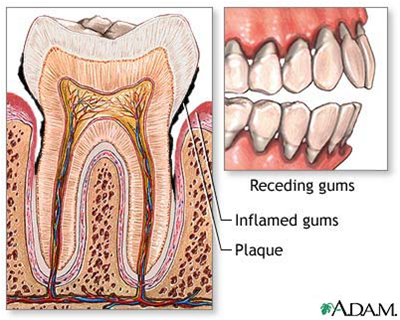
Dental pain, which we refer to as toothache, originates from the tooth itself or the periodontal tissues. It ranges widely, from barely noticeable to one of the most severe pains imaginable. It usually indicates serious problems affecting the tooth or periodontal tissue, but may also originate elsewhere in the body.
An adult has 32 teeth: eight incisors, four canines, eight premolars and twelve molars. The primary dentition lacks premolars and third molars, so it consists of twenty teeth.
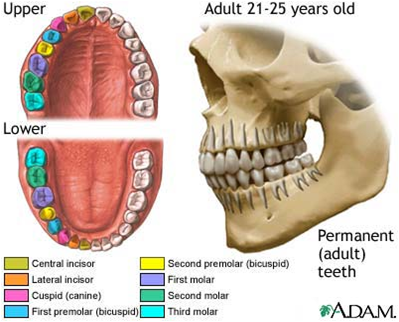
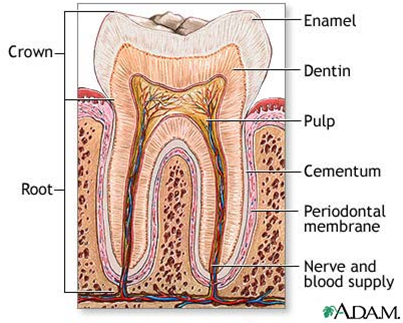
To understand toothache or dental pain, a basic knowledge of the anatomy of the dental organ is required. A tooth has its own blood supply (blood vessels) and innervation (nerve supply), which is why it is considered an organ. The dental crown is covered by enamel, which is the hardest material in the body. The dentine beneath it forms the basic shape of the tooth (crown, tooth neck and tooth root). In the central cavity is the soft pulp, composed of blood vessels, nerves and the cells surrounding them. The tooth root is covered by dental cementum and the periodontal ligament, which anchors the tooth in its bony socket. It consists of a large number of fibres that act like a car's suspension and are extremely well innervated. Excessive force during biting or an impact immediately triggers a strong pain stimulus (dental pain).
The causes of toothache are: decay, injury, periodontal disease, therapy, occlusal disorders…
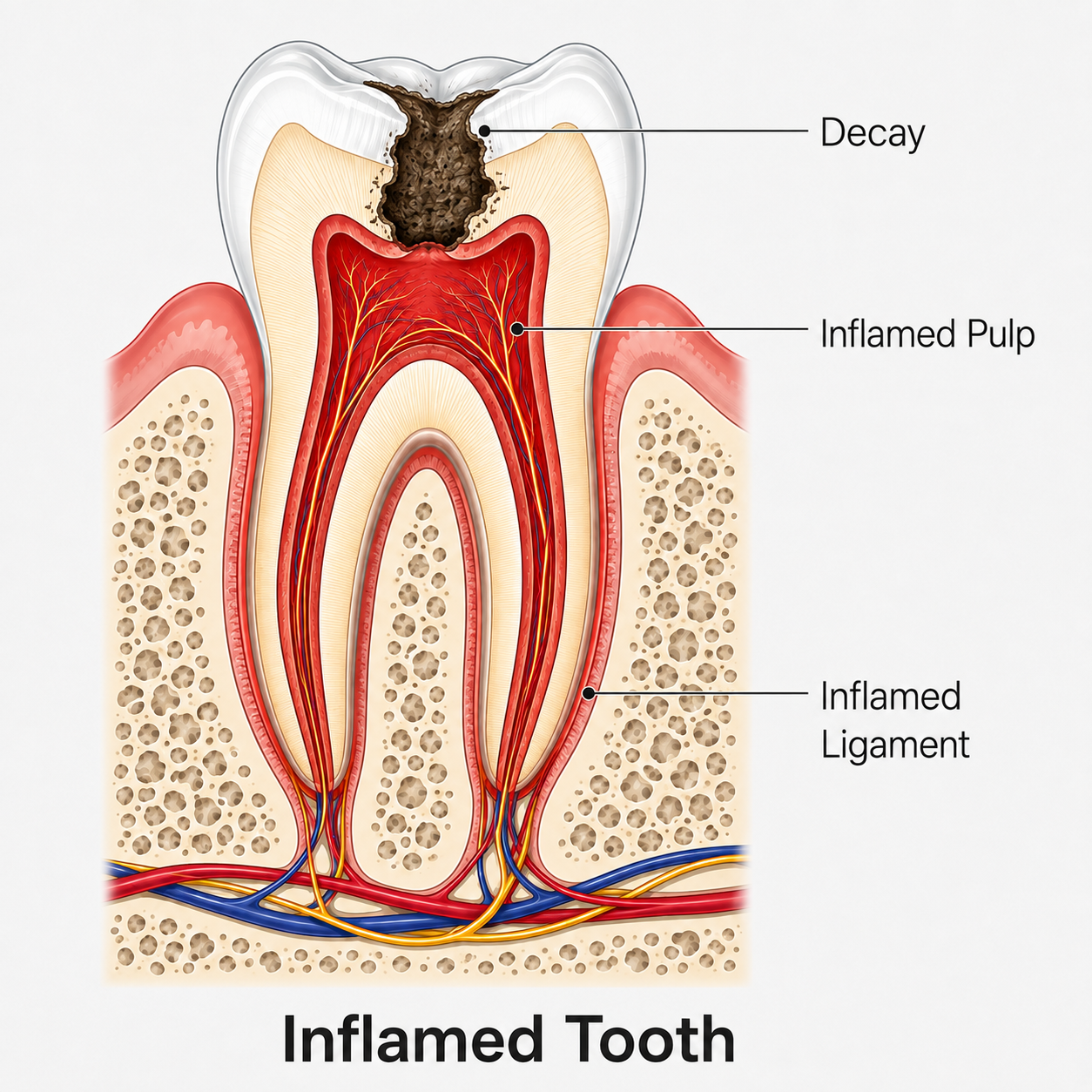
The initial carious process begins beneath an almost intact enamel layer and is determined by the permeability of the enamel. The more permeable the enamel is (poor organisation of the crystals), the greater the likelihood of the decay process beginning. When decay reaches the area of the pulp or its immediate vicinity, an inflammatory process develops within it, causing dental pain.
Initially, the tooth is sensitive to changes in temperature and osmotic pressure (sweet, sour, salty…), which histologically appears as a preliminary stage of inflammation (pulpal hyperaemia). Later, the inflammation involves the entire pulp, which may result in constant, throbbing pain…
Pulp inflammation is otherwise asymptomatic or without dental pain in 70% of cases, but the process always causes pulp necrosis and consequently pulp gangrene when bacteria colonise the dead tissue. The tooth becomes sensitive to impact, touch or pressure when the pulp inflammation reaches the root apex and consequently spreads to the part of the periodontal ligament surrounding the root apex.
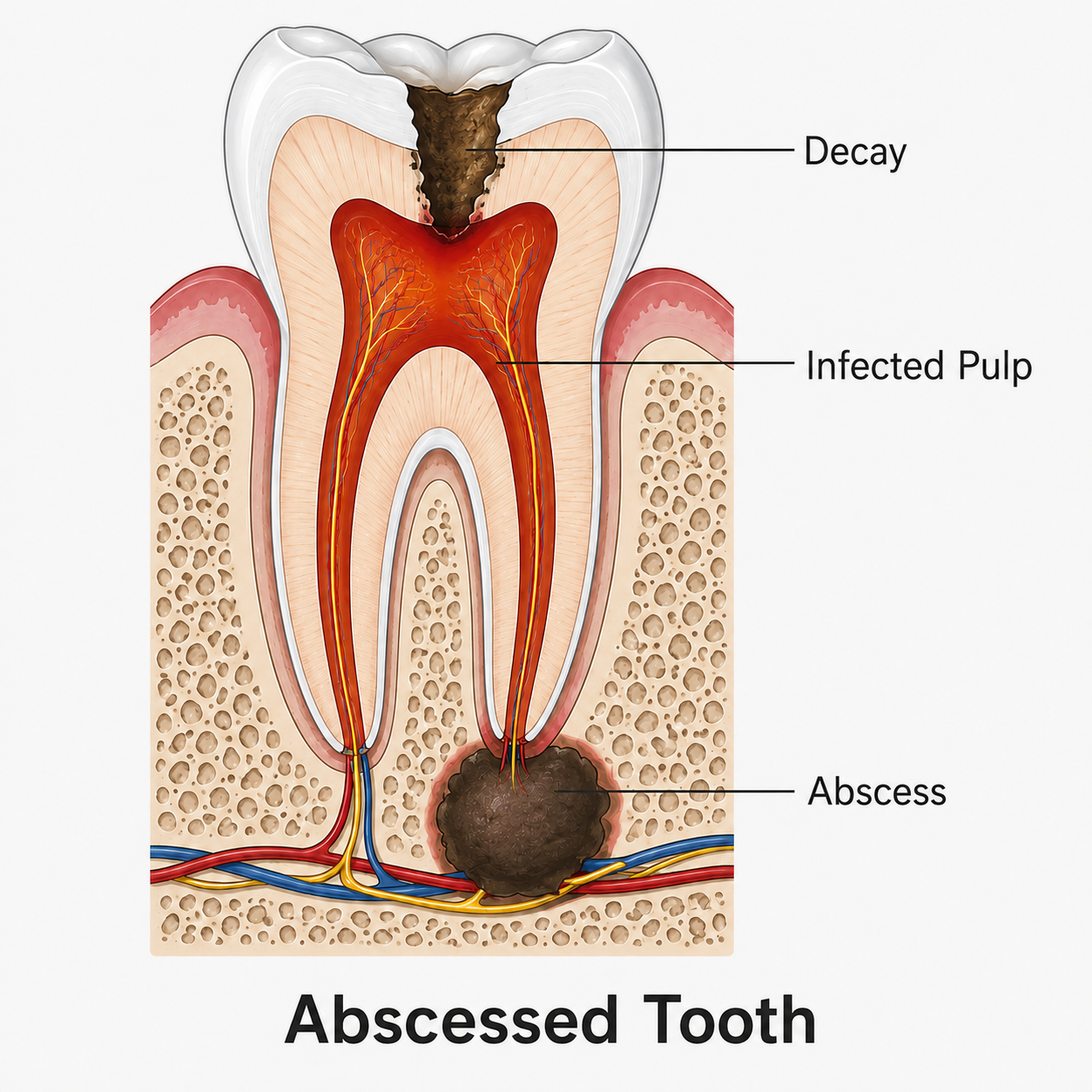
In the later stages of the disease, the problem spreads to the periodontal tissues around the root apex. Initially only to the periodontal ligament, as already mentioned, and then to the bone.
Inflammation causes the death of primary tissue, while fluid and consequently bacteria accumulate within these spaces (a purulent process), resulting in increased pressure in the bone and beneath the periosteum, which causes severe toothache (dental pain), even though the dental organ itself has long since lost its vitality.
When the purulent processes break through the periosteum, the pain usually subsides, but swelling develops. The processes may be accompanied by enlarged, painful and swollen lymph nodes and an elevated body temperature.
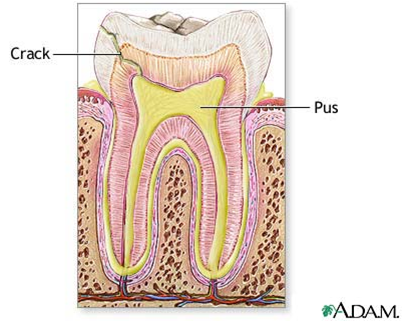
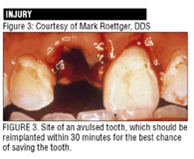
The second most common cause of dental pain is injury to the dental organ. The injury may affect only the enamel layer and cause no dental pain.
If fractures of the hard dental tissues extend to the dentine or even the dental pulp, the resulting process is identical to that described above in the case of tooth decay. A fracture involving the dentine initially causes tooth hypersensitivity; if the injury is not treated within a reasonable period of time, it causes dental pain as a result of complete inflammation of the dental pulp, which later also spreads to the periodontal tissues.
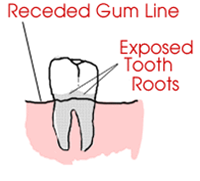
In the terminal stage of the disease, the teeth may be painful because of their considerable mobility and overloading of the remaining supporting apparatus of the tooth.