


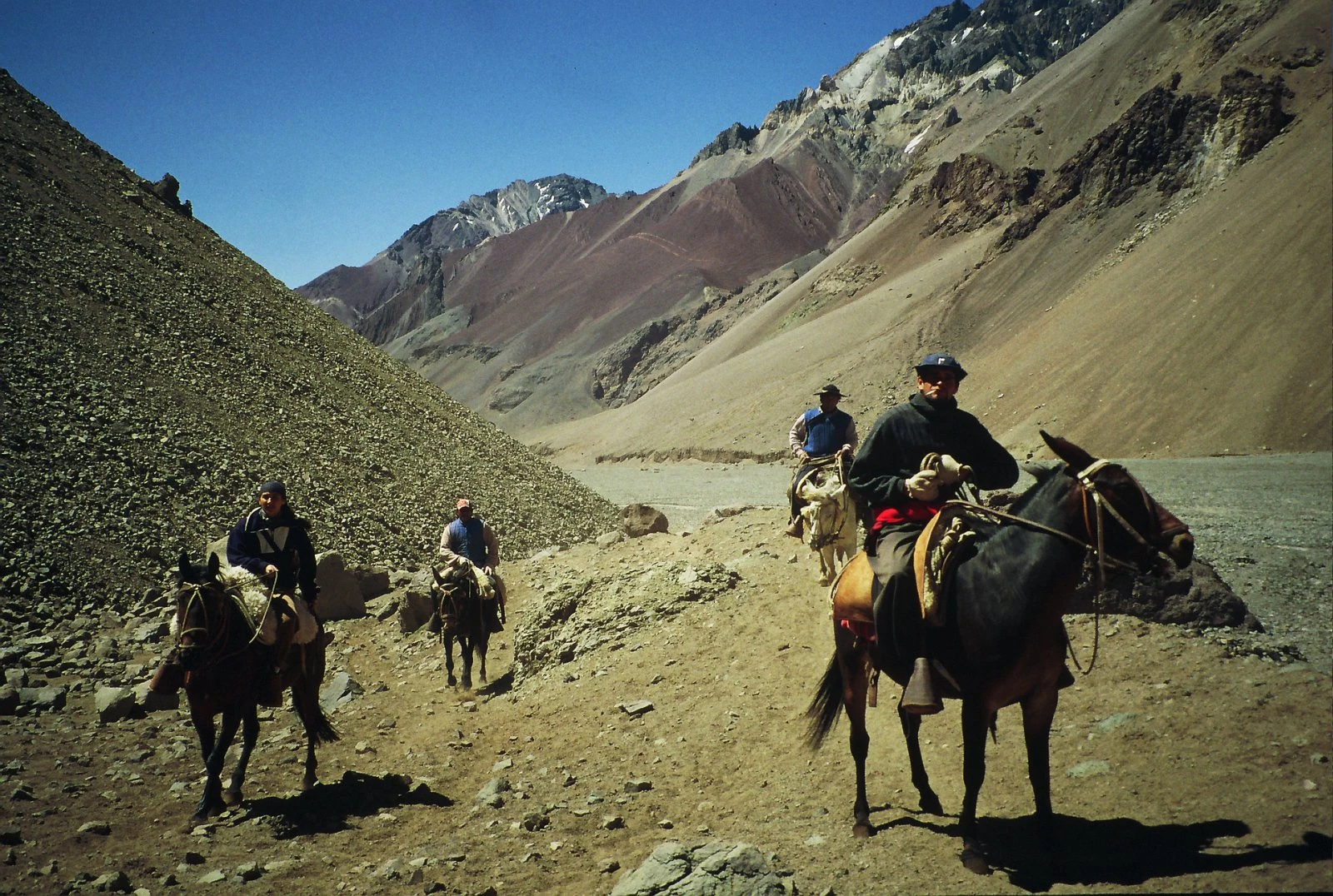
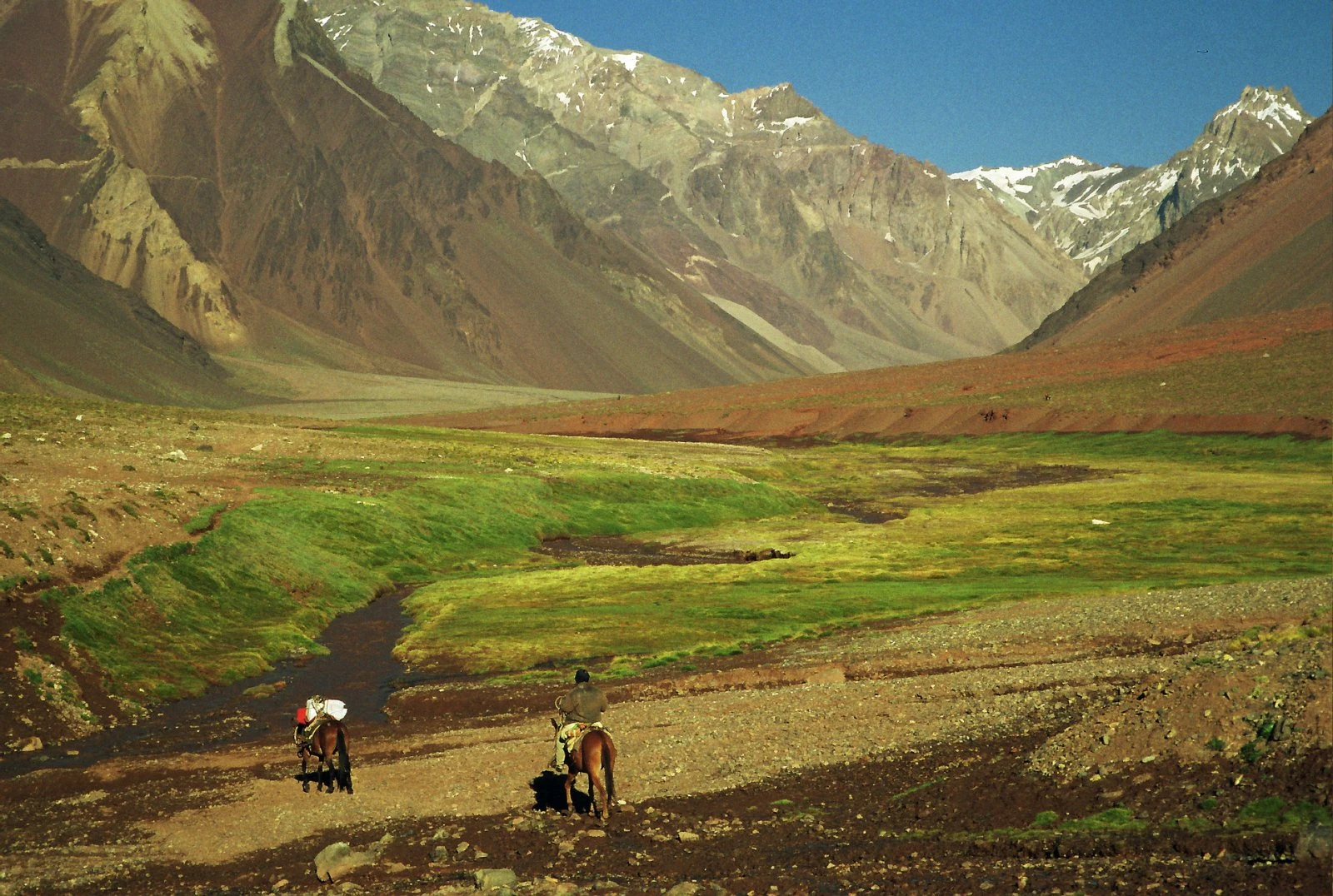
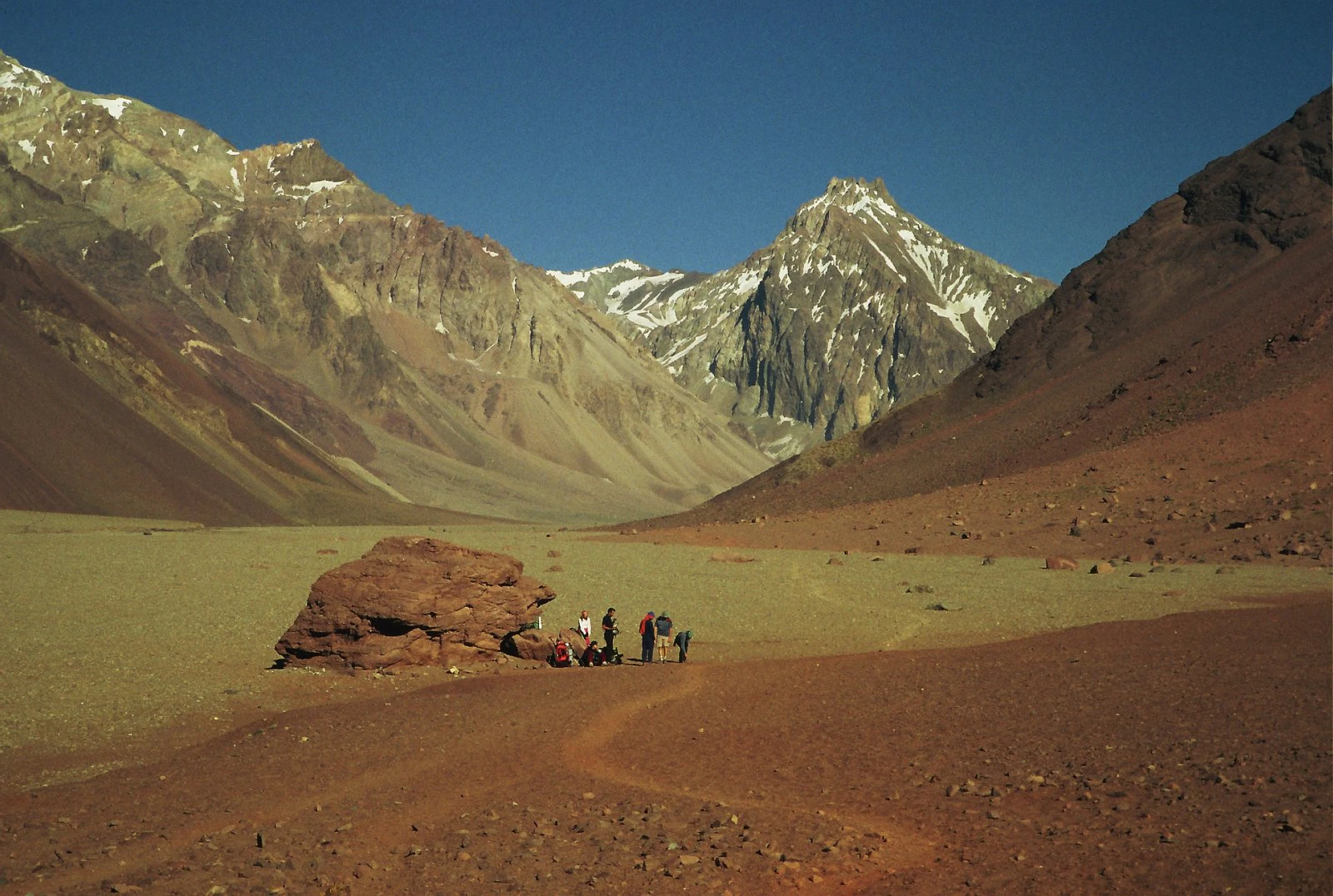
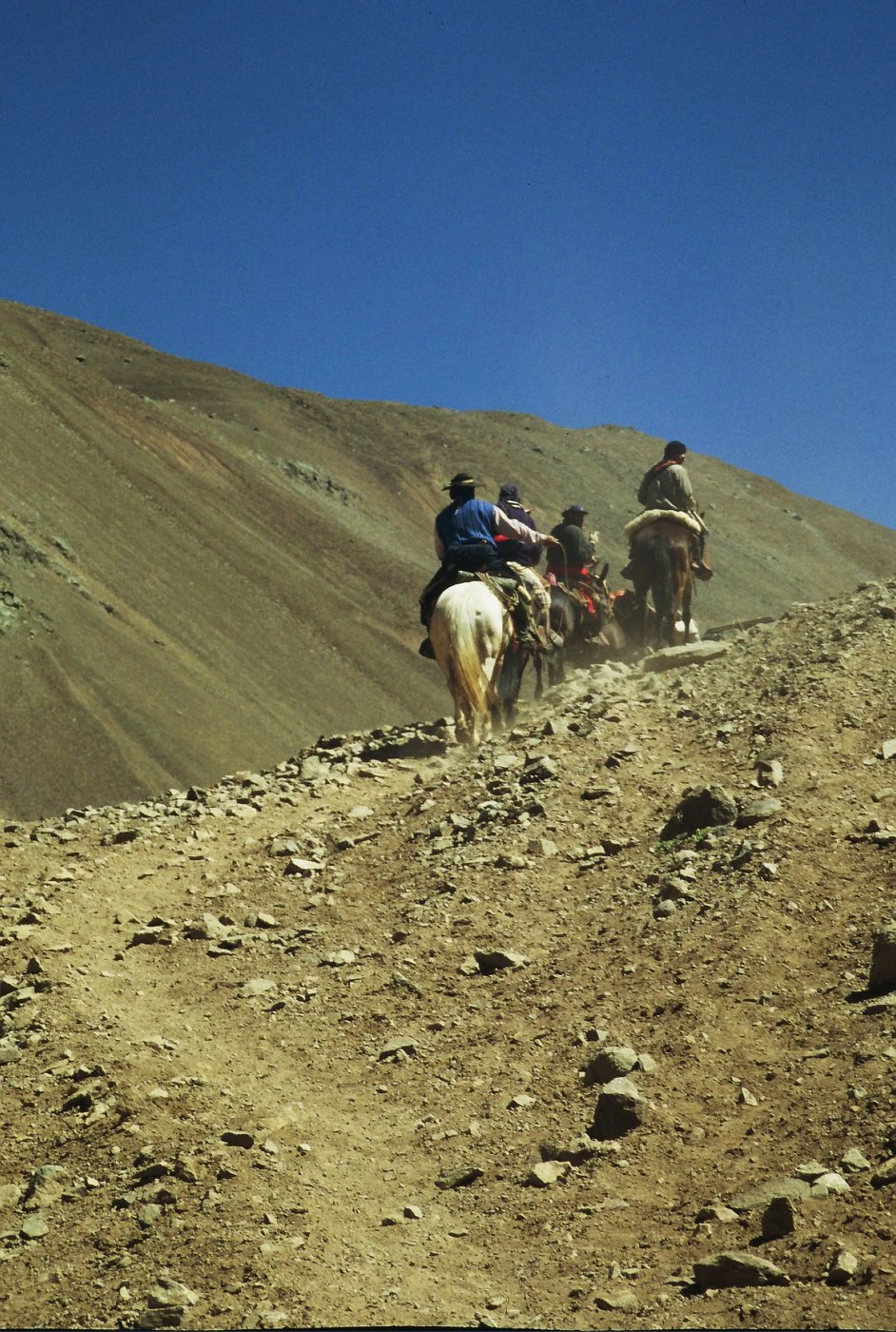
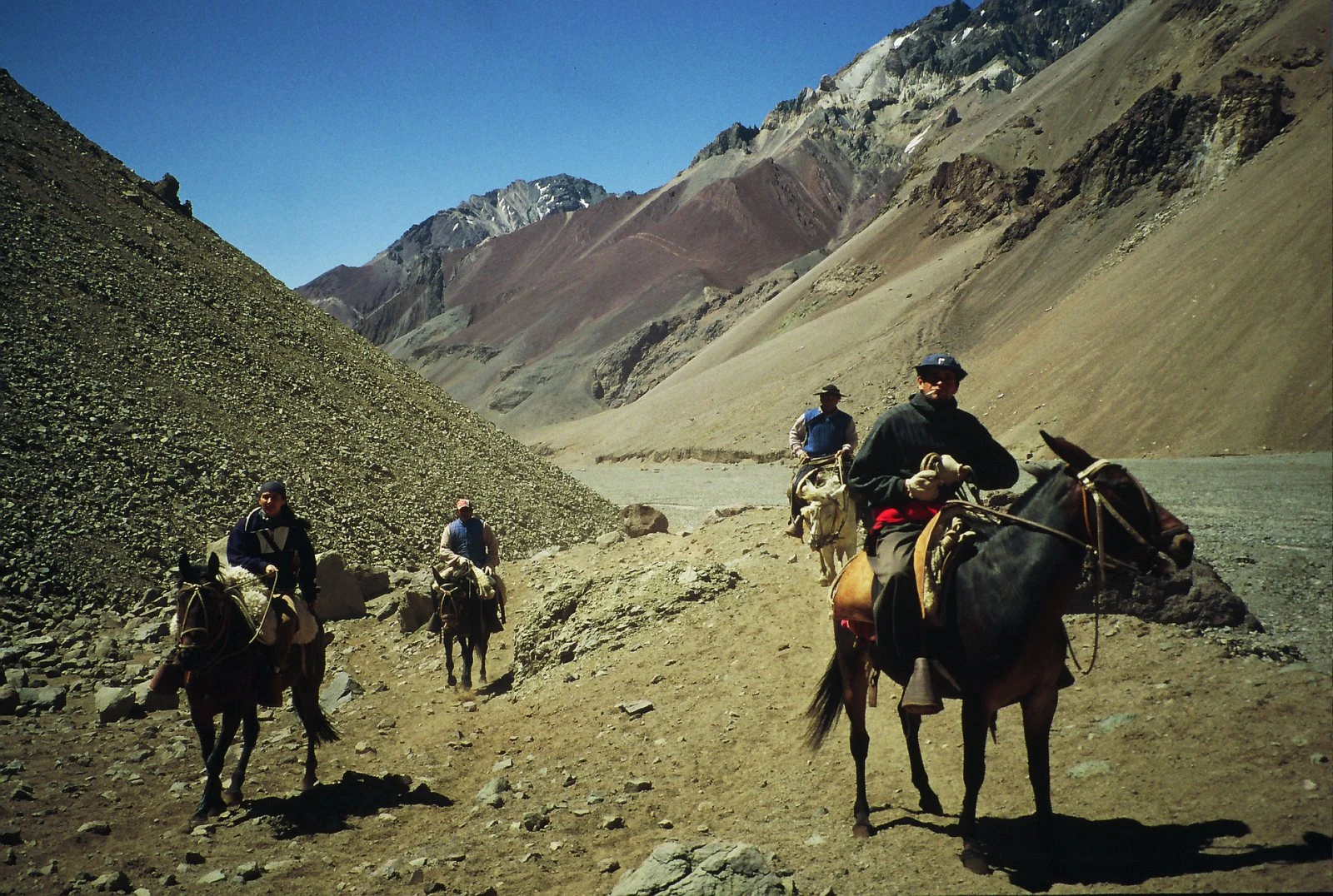
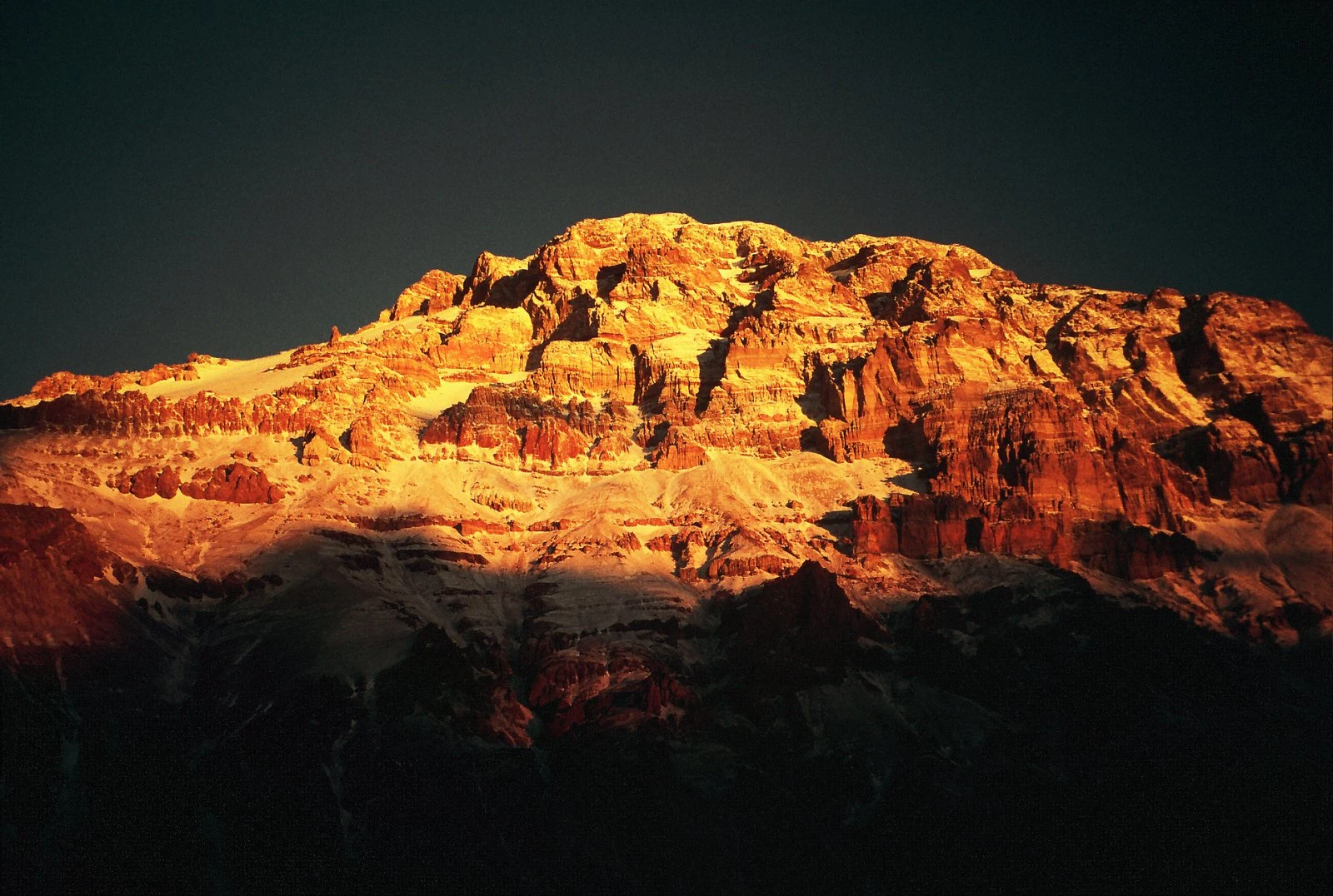
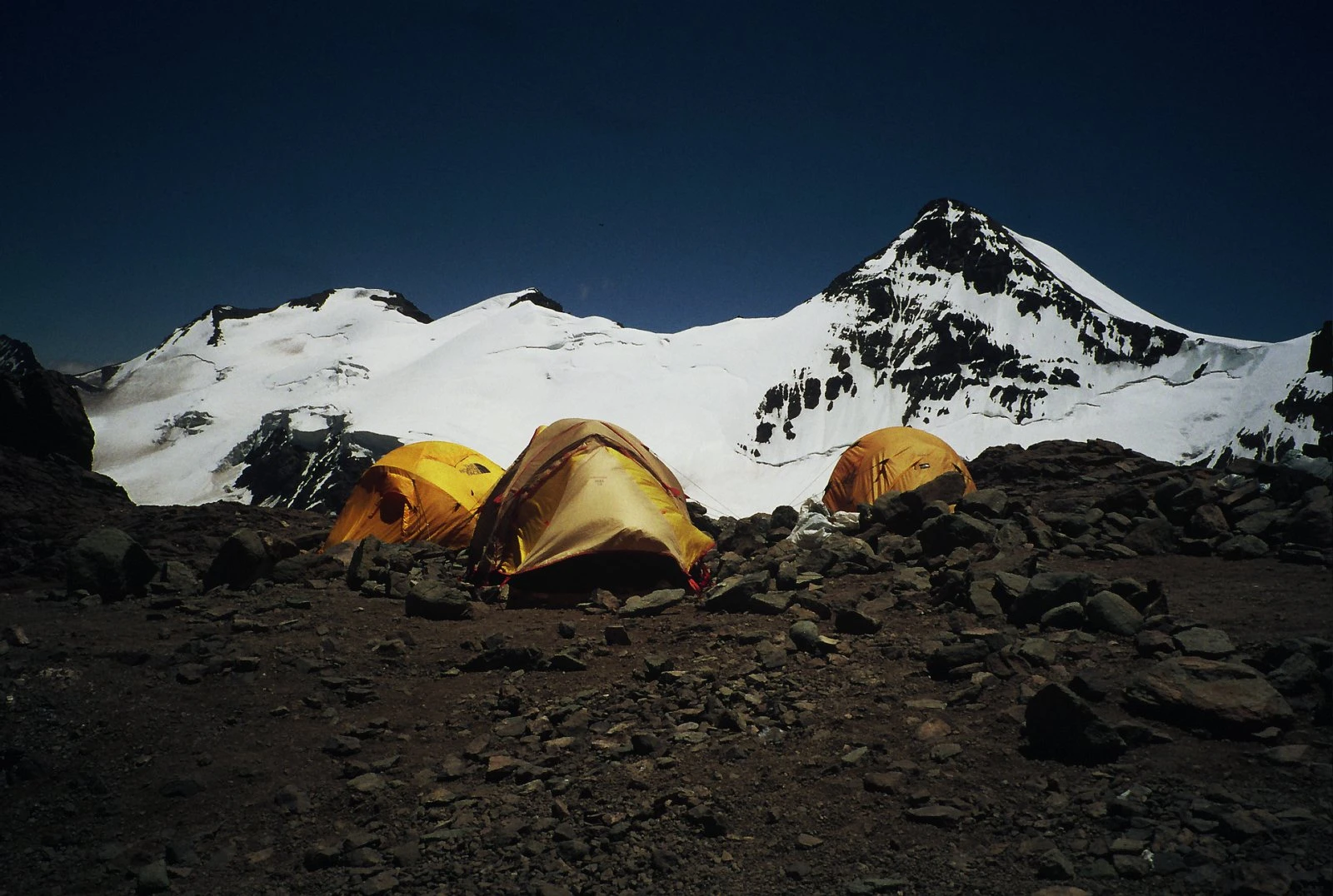
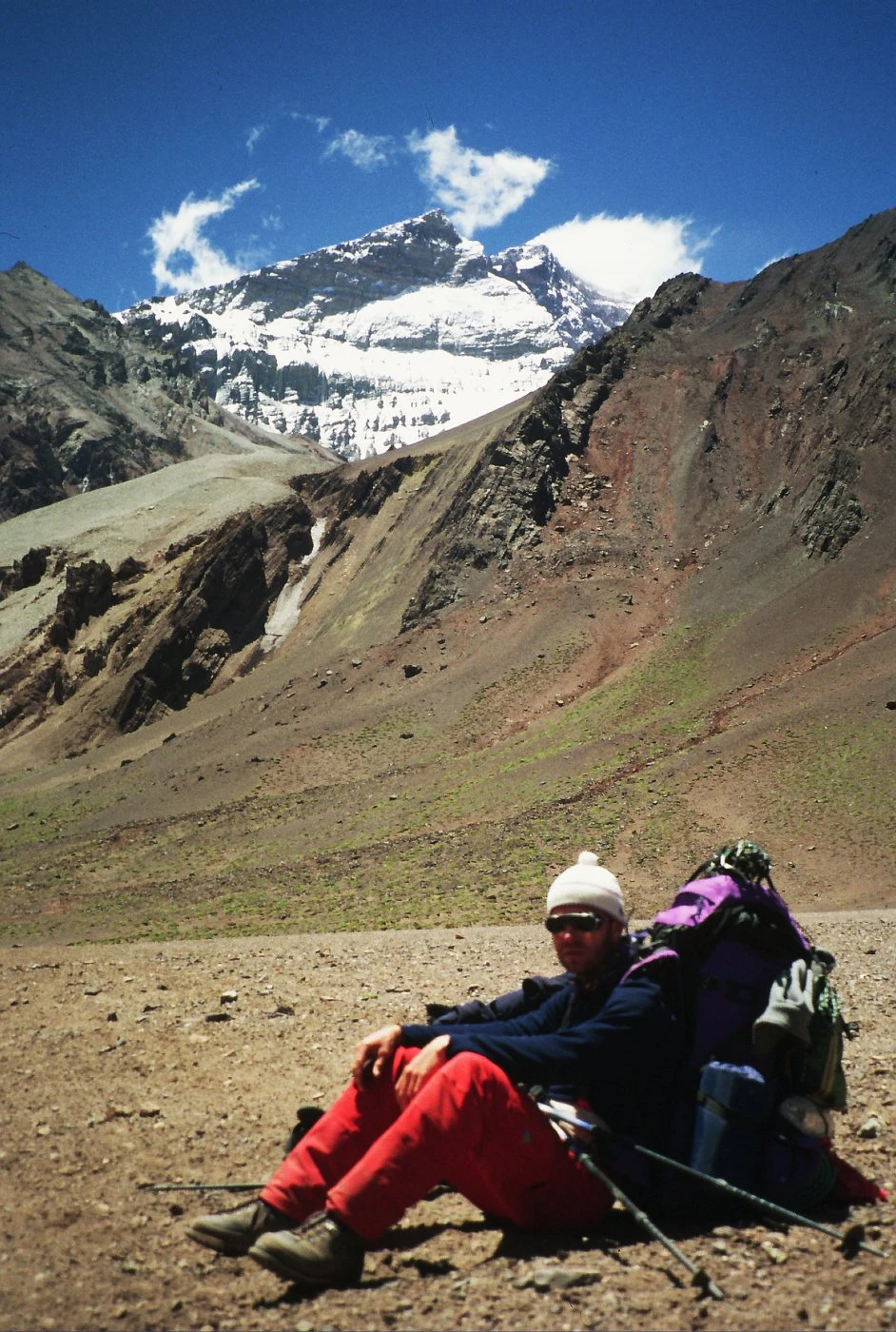
The highest peak of the Cordillera and of both Americas rises from the Atacama on the Chilean side and from the somewhat more humid foothills of hot Argentine Mendoza. It is technically undemanding, but the extremely dry and cold air and strong winds make the ascent strenuous. The route begins by the main road between Chile and Argentina, not far from the national border, at an altitude of 2,500 m. The dusty trail, with no water sources, stretches for almost 50 km to base camp at 4,600 m. Mules help climbers transport their equipment and are usually considerably faster. At camp there are communal tents, satellite communications, a doctor and even some food, all of course at prices appropriate to the altitude and exotic location. My wife and I also made several acclimatization trips towards the higher camps, carrying up our high-altitude tent, ice equipment and some food along the way, which proved useful for the final ascent. After a week of preparation at base camp we were ready for the summit, which could, alas, have been taken from us by a strong wind (vento bianco) that broke out only a few hours after our descent to Nido Condores. A mountain can break a person’s spirit, because it is high and, for the reasons already mentioned, quite demanding—certainly not for the soft-hearted.
Aconcagua
Gallery
✦ This article was translated from the original with the assistance of an AI translation system.