


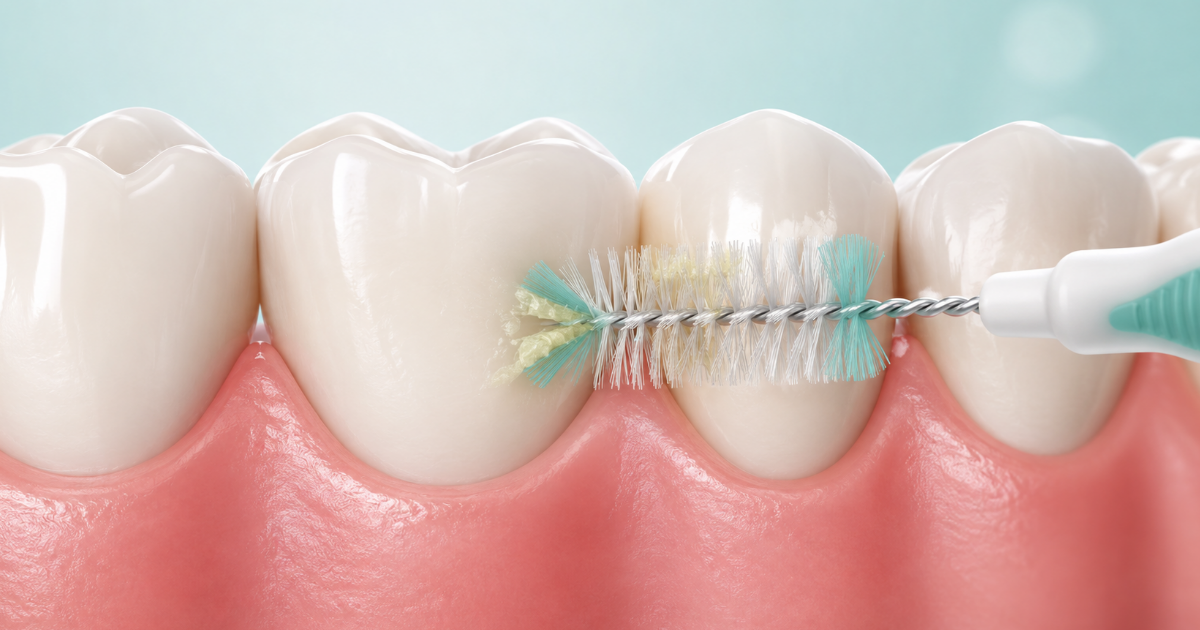
The use of an interdental brush is the essence of daily oral hygiene.
An interdental brush is an aid for maintaining oral hygiene. The development of interdental brushes goes far back in history. The first forms are said to have been used by the Babylonians 5,000 years ago. They chewed a thin wooden stick that they shaped individually. Approximate predecessors of today’s interdental brushes were toothpicks, which first appeared among the ancient Greeks and Romans. The Chinese are said to have used a tufted brush-like device about 3,600 years ago. They transformed one end of a wooden stick into a broom-like structure. Wood from aromatic trees was used to make them so that, in addition to cleaning, they also achieved a disinfecting and refreshing effect.
The Swiss company Curadent played a pioneering role in the development of today’s interdental brushes in the 1970s. It remains at the forefront of innovation in this field. A modern interdental brush must be effective, atraumatic and acceptable. It is not enough for it to enter the interdental space and remove bacterial biofilm. Cleaning must not injure the gum in the interdental space (the interdental papilla). The brush must be conveniently designed so that relatively difficult cleaning becomes easier and is also suitable for people with less dexterity. An interdental brush is effective when its bristles fill the entire interdental space. The brushes have a metal core made of special alloyed surgical wire into which thin, firm yet elastic bristles are fixed; during cleaning of the interdental space they work on the principle of an umbrella. At the entrance to the interdental space they compress, and within the space itself they expand and adapt to the morphology of the tooth surfaces in this area. The wire core described above ensures atraumatic use. This property is further complemented by the conical mounting in the plastic holder, which also gives the wire core greater flexibility and reduces the likelihood of the brush breaking. The brushes are most often supplied with a system for measuring the size of interdental spaces, which further increases cleaning effectiveness and reduces the possibility of injury to structures in the interdental space.
Correct use of interdental brushes ranks at the very top among all aids for maintaining oral hygiene in terms of importance and ease of use. Unfortunately, many patients believe that they have injured themselves with an interdental brush because, at least at the beginning of use, the gum bleeds heavily during cleaning. This belief is, of course, completely mistaken and is actually the opposite of what is happening. The gum bleeds because plaque is present in the interdental space, which causes inflammation of the gums (gingivitis). With thorough and correct removal of plaque from the teeth and interdental spaces, gingivitis, which represents the initial stage of periodontal disease, can be completely eliminated.